No prescription medicines
You take nothing regular, you are not pregnant or nursing, and you want nutritional support alongside sleep, exercise and mental engagement rather than instead of them.
Memodyne® is designed for people looking to support memory, mental clarity, concentration, and overall brain health naturally. Its balanced blend of carefully selected nutrients works together to support your brain as part of a healthy daily routine.
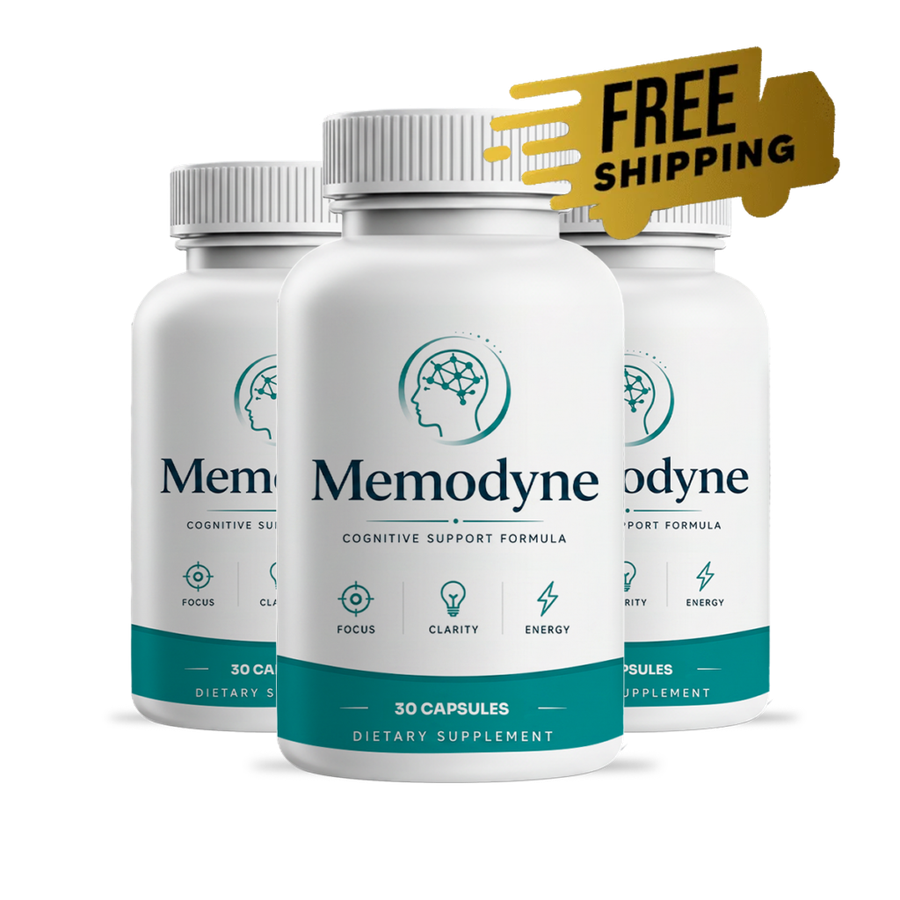
Memodyne is a once-daily capsule supplement marketed to support memory, focus, mental clarity and general brain health in adults. Each bottle holds 30 capsules at one per day, making one bottle a 30-day supply. The formula contains six actives: Ginkgo Biloba Leaf, Bacopa Monnieri, Phosphatidylserine Complex, Huperzine-A, N-Acetyl L-Carnitine HCl and St. John’s Wort Extract.
It is a dietary supplement rather than a medicine, and it is not FDA-approved. Packages run $138 to $294 with a 60-day money-back guarantee counted from purchase date. Four of the six ingredients have genuine cognitive research behind them. One — St. John’s Wort — has essentially none for cognition, and carries one of the largest drug-interaction profiles in the herbal pharmacopoeia.
Before anything else: this formula contains St. John’s Wort. That single ingredient changes the safety conversation completely. St. John’s Wort induces the CYP3A4 enzyme system and P-glycoprotein, which means it can reduce blood levels — and therefore the effectiveness — of a long list of prescription medicines, including hormonal contraceptives, warfarin, ciclosporin, HIV antiretrovirals and several cancer treatments. Combined with an antidepressant it raises the risk of serotonin syndrome. If you take any prescription medication, show this label to a pharmacist before you order. And if your memory concerns are persistent or worsening, that needs a medical assessment rather than a supplement — several common causes are treatable.
Strip away the marketing and the proposition is straightforward: one capsule containing six actives, taken daily for months rather than days, aimed at adults who have noticed their recall is not what it was, or who want to stay sharp under load. It sits in the nootropic corner of the supplement market, which means it is designed to be taken as a routine rather than felt as an event.
The ingredient selection is not cynical. Bacopa Monnieri, Ginkgo Biloba, Phosphatidylserine and N-Acetyl L-Carnitine are four of the most researched cognitive ingredients in existence, and assembling them in one capsule is a defensible formulation choice. Huperzine-A is pharmacologically real — arguably too real for a product sold without any dosing guidance. Our page on what Memodyne is works through the product and who it suits in detail.
What we take issue with is everything surrounding those four. The sixth ingredient belongs to a different therapeutic category entirely. No individual doses are published, so you cannot tell whether the Bacopa is at the 300 mg the trials used or at a tenth of it. And the official marketing page carries an “FDA Approved Facility” badge that misdescribes how supplement regulation works.
There is also a timing problem worth naming early. The seller pushes a six-bottle package covering six months. Your money-back guarantee lasts sixty days. Those two numbers are not compatible, and the gap between them is where buyers lose money.
More useful than any ingredient list: find your medication class below. For a large number of people this single table is the difference between a harmless purchase and a genuinely risky one.
Find your medication class below. This is the single most useful thing on this page, and it exists because no other page selling this formula prints it. It is a summary of documented interaction categories, not a complete list and not medical advice — take the label to a pharmacist.
Combining serotonergic drugs with St. John’s Wort raises the risk of serotonin syndrome, which can be life-threatening. This combination is avoided in clinical practice.
Enzyme induction lowers hormone levels. Breakthrough bleeding and unintended pregnancies are documented outcomes. Anyone relying on hormonal contraception needs to know this before ordering, not after.
Reduced drug levels have been linked to transplant rejection. This is among the most serious documented interactions in the herbal literature.
Substantially reduced plasma concentrations, with the risk of treatment failure and resistance. Health authorities have issued specific warnings about this pairing.
Reduced anticoagulant effect from enzyme induction. Ginkgo in the same capsule independently affects platelet function, so this formula pulls in two directions at once.
Reduced plasma levels of several oncology drugs have been documented. Any supplement decision during cancer treatment belongs with your oncology team.
All affected by CYP3A4 or P-glycoprotein induction to varying degrees. The direction is consistent: less drug in your bloodstream than your prescriber intended.
Not a St. John’s Wort issue but a Huperzine-A one: it shares their mechanism as an acetylcholinesterase inhibitor, so combining them stacks the same effect.
Interaction risk drops considerably, though photosensitivity from St. John’s Wort remains, and it is still avoided in pregnancy and breastfeeding.
One more point worth stating plainly. Stopping St. John’s Wort abruptly can also cause problems, because drug levels that had been suppressed rise again once the enzyme induction fades. That means both starting and stopping matter — another reason a pharmacist should be part of this decision.
You take nothing regular, you are not pregnant or nursing, and you want nutritional support alongside sleep, exercise and mental engagement rather than instead of them.
The consultation is free and takes minutes. Photograph the label and go. This applies far more widely than most people assume, including to contraception.
Progressive memory difficulty needs assessment. Thyroid disease, B12 deficiency, sleep apnoea, depression and medication side effects are all treatable causes.
The meter on each row measures one thing: how much published human research supports that ingredient for memory and cognition — not for mood, not for circulation in general, not for antioxidant capacity in a test tube. Four rows score well. One scores very badly, and it is the one that should decide your purchase.
The strongest ingredient in this formula and the one with the most on-topic evidence. Multiple randomised, placebo-controlled human trials have measured memory acquisition and delayed recall as actual endpoints, using standardised extracts at around 300 mg daily. The consistent finding across those trials is a real but modest improvement in memory consolidation — and, importantly, one that took eight to twelve weeks to appear. Anyone expecting a next-day effect from Bacopa has misunderstood how it works.
Among the most extensively researched botanicals in existence, with large trials behind it. The evidence splits: the big prevention trials found it did not stop healthy older adults developing dementia, while smaller studies in people with existing cognitive impairment reported modest benefits. Standardised extracts at 120–240 mg daily are the researched range. It also has a documented effect on platelet function, which matters before surgery and alongside blood thinners.
A genuine structural component of neuronal membranes, with human studies in older adults reporting modest memory benefits at around 100–300 mg daily. It carries a qualified health claim in the United States — which sounds impressive until you read the mandatory disclaimer attached to it, stating the scientific evidence is limited and inconclusive. Sourcing matters too: the early positive trials used bovine-derived material, while most modern supplements use soy-derived.
Pharmacologically the most active compound here. It inhibits acetylcholinesterase — the same enzyme target as prescription Alzheimer's drugs like donepezil — which means it is not really a gentle botanical at all. Trials exist but many are small and methodologically weak. Because it shares a mechanism with prescription medicines, it should never be combined with them without a prescriber's involvement, and cyclical rather than continuous dosing is commonly advised.
An acetylated form of carnitine that crosses the blood-brain barrier more readily than plain L-carnitine. Meta-analyses in age-related cognitive decline have reported small positive effects, generally at 1,500–3,000 mg daily — doses far larger than a shared six-ingredient capsule is likely to deliver. Reasonable inclusion, almost certainly under-dosed at this format.
This is the ingredient that should decide your purchase, and not for the reason the marketing suggests. St. John's Wort has genuine evidence — for mild to moderate depression, not for memory or cognition, where it has essentially none. What it does have is one of the largest interaction profiles of any herbal ingredient in the pharmacopoeia. It induces CYP3A4 and P-glycoprotein, reducing blood levels of contraceptives, warfarin, ciclosporin, HIV medicines and several cancer drugs. With antidepressants it raises serotonin syndrome risk. Its presence in a memory formula is difficult to justify on cognitive grounds and impossible to ignore on safety grounds.
The dose problem. These six actives are listed without individual milligram amounts. That matters more here than in most categories, because the research doses are known and specific: Bacopa trials used around 300 mg of standardised extract daily, Ginkgo studies used 120–240 mg, phosphatidylserine studies used 100–300 mg, and acetyl-L-carnitine meta-analyses used 1,500–3,000 mg. Add those together and you are well past what a single capsule can physically hold alongside two more ingredients. Something is being under-dosed, and without a published breakdown you cannot tell what. Ask the manufacturer for the amounts in writing before you order — see the full ingredient breakdown.
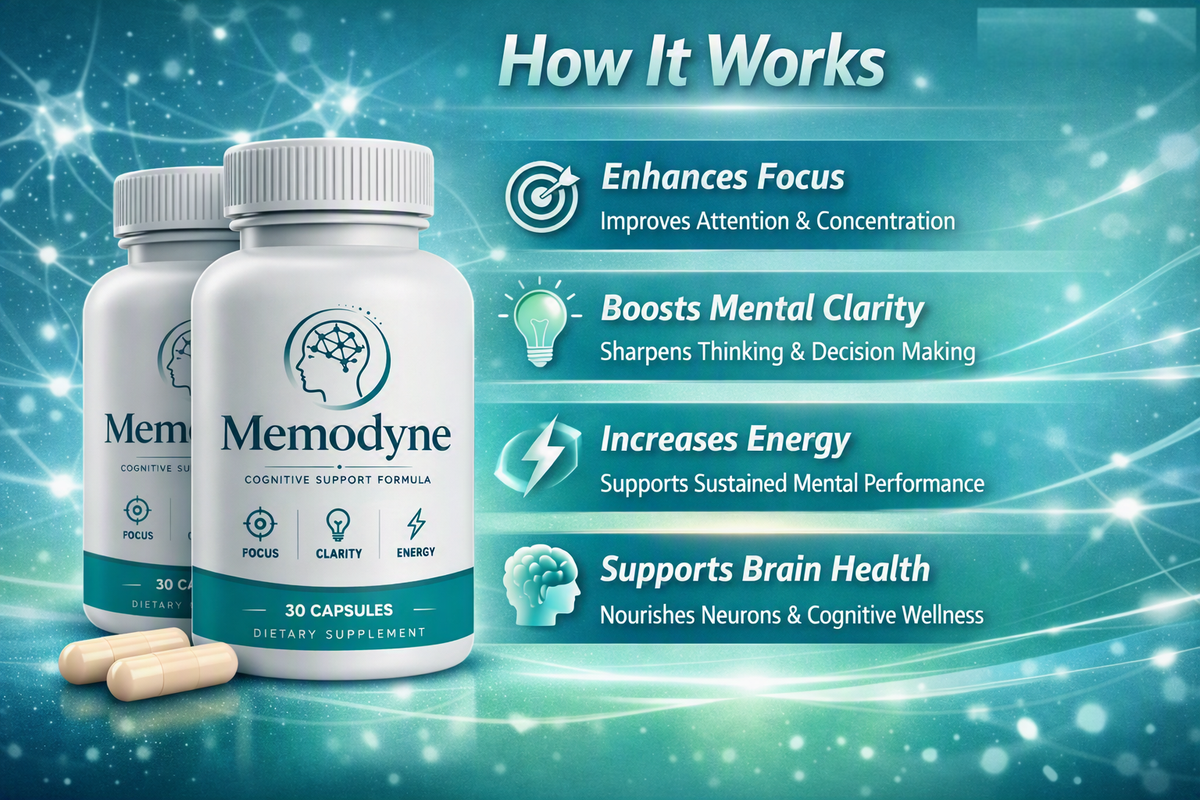
Three pathways carry the plausible part of this formula, and a fourth is doing something entirely unrelated to memory.
Cholinergic signalling. Acetylcholine is the neurotransmitter most directly tied to memory formation, and Huperzine-A raises its availability by inhibiting the enzyme that breaks it down. This is real pharmacology — the same target prescription Alzheimer’s drugs use — which is precisely why it deserves more caution than a botanical framing suggests.
Synaptic and membrane support. Bacopa’s bacosides have been studied for effects on dendritic branching and synaptic communication, and phosphatidylserine is a genuine structural component of neuronal membranes. This is the slowest pathway and the one with the most credible human trial data behind it.
Cerebral circulation and cellular energy. Ginkgo’s flavonoids and terpenoids have been studied for effects on blood flow, while acetyl-L-carnitine supports mitochondrial function in neurons. Reasonable, well-characterised, and dose-dependent.
And the fourth. St. John’s Wort acts on serotonin reuptake and related monoamine systems. That is a mood pathway, not a memory pathway. Its inclusion makes sense only if the product is quietly aiming at mood alongside cognition — which the marketing never says, and which would need saying, because that is exactly where the interaction risk comes from.
Supplement marketing promises transformation. The ingredient research supports something smaller: modest average effects, measured across weeks to months, mostly in older adults or people under cognitive load. Here is the honest version of each claim.

We ran the eight checks a sceptical buyer would run, comparing what this reference publishes against what is available on the official Memodyne marketing page.
| Buyer check | Published here | Official Memodyne page |
|---|---|---|
| St. John’s Wort interactions | Full board, 9 medication classes | Not mentioned at all |
| “FDA approved” claim | Corrected — no supplement is | Shown as “FDA Approved Facility” |
| Ingredient list vs FAQ | Contradiction documented | FAQ names 4 ingredients not in the list |
| Individual doses | Undisclosed — and we say so | Not addressed |
| Realistic timeline | 8–12 weeks, from the Bacopa trials | “Results may vary” |
| Huperzine-A drug parallel | Stated — same target as donepezil | Described as a natural compound |
| Refund steps | Actual process, with caveats | “No questions asked” plus a return requirement |
| “Save $780” maths | Identified as a $179 anchor | Presented as real savings |
Reflects the official Memodyne marketing page as reviewed in August 2026. Pages change — verify current claims yourself.
“Four stars. I took it for three months and my recall on names did seem steadier by the end, though I also started sleeping properly in the same period, so I honestly cannot separate the two. What I appreciated was a page that told me to expect twelve weeks rather than twelve days.”

“I am on the pill and had no idea St. John’s Wort could interfere with it. This was the only page that said so. I did not buy the product and I am extremely glad I read this first — that information is worth more than any discount code.”

“Three stars, and the reason is the capsule itself gave me vivid dreams and some nausea in the first fortnight. That settled, but nobody warned me. Reading this site afterwards, the Huperzine-A explanation made sense of it immediately.”

Testimonials are individual experiences and are not a guarantee of results. Portraits are illustrative stock images, not photographs of the reviewers. There is currently no independent third-party review record for Memodyne on platforms such as the BBB or Trustpilot — we would rather tell you that than imply a track record that does not yet exist. Read the full independent review.
The research behind the lead ingredient points at 8–12 weeks. Your refund window closes at day 60. That mismatch is the single most useful thing to know before you choose a package — and it is why the six-bottle sale price is the best per-day value and the worst first purchase.
60-day supply
$138.00 total + shipping
90-day supply
$177.00 total · free US shipping
180-day supply
$294.00 total · free US shipping





Package pricing verified 2026-08-14 against the official order page. Sales pages in this category advertise savings of up to $780, which is calculated against a “regular price” of $179 per bottle — a figure nobody has paid. Compare per-bottle and per-day cost instead. Confirm your final total, including tax and shipping, before submitting your order.
The guarantee is real. The friendly summary on sales pages is not the whole policy, and reading only the badge is how buyers get caught out on day 58.
The 60 days run from your purchase date, not delivery. Your order confirmation email is the record that matters. Diarise day 50.
Contact customer service in writing before you post anything back, and keep a copy. The timestamp is your evidence that you acted in time.
The published policy describes returning what you have not used, even though the same page says “no questions asked.” Confirm which applies to your order.
The evidence points at 8–12 weeks; the guarantee covers 60 days. Decide inside the window that protects your money, not the one that suits the science.
Before you submit your order: check the checkout page for any pre-selected subscription or upsell option, and confirm the final total including shipping and tax. The official page states there is no hidden subscription — verify that on the checkout screen itself, and screenshot it. Full detail on the refund policy page.
Memodyne is a once-daily capsule supplement marketed to support memory, focus and mental clarity in adults. Each bottle holds 30 capsules at one per day, making one bottle a 30-day supply. The formula contains six actives: Ginkgo Biloba Leaf, Bacopa Monnieri, Phosphatidylserine Complex, Huperzine-A, N-Acetyl L-Carnitine HCl and St. John's Wort Extract. It is a dietary supplement, not a medicine, and it is not FDA-approved. Full detail on the ingredients page.
Yes, and it matters more than anything else about this product. St. John's Wort induces the CYP3A4 enzyme system and P-glycoprotein, which lowers blood levels of a long list of prescription medicines. Documented consequences include contraceptive failure, transplant rejection from reduced ciclosporin levels, and loss of HIV treatment control. Combined with an antidepressant it raises serotonin syndrome risk. It also has no meaningful evidence for memory or cognition — its research base is in mild to moderate depression. If you take any prescription medicine, show the label to a pharmacist before ordering.
No, and no dietary supplement is. The FDA does not approve supplements the way it approves prescription drugs — there is no pre-market approval and no requirement to demonstrate efficacy before sale. There is also no such thing as an “FDA approved facility”: facilities are registered and subject to inspection, which is a different thing entirely. Marketing pages in this product family display an “FDA Approved Facility” badge, and that phrasing is not accurate.
One capsule daily with water, generally in the morning. Taking it consistently matters far more than taking it at a precise hour, because the ingredient with the best evidence here — Bacopa Monnieri — works cumulatively over eight to twelve weeks rather than acutely. Bacopa can cause stomach upset on an empty stomach for some people, so taking it with food is a reasonable adjustment. Store cool and dry, out of reach of children.
Three packages are offered: two bottles at $138 total ($69 per bottle) plus shipping; three bottles at $177 total ($59 per bottle) with free US shipping; and six bottles at $294 total ($49 per bottle) with free US shipping. That works out at roughly $2.30 a day on the two-bottle package and $1.63 a day on the six. Sales pages advertise savings of up to $780, calculated against a $179-per-bottle regular price that no customer has paid — treat it as an anchor. Current pricing is on the Memodyne official website.
Set expectations by the ingredient with the strongest evidence. Bacopa Monnieri's randomised trials generally ran eight to twelve weeks before measurable memory changes appeared, and that is the honest timeline for this formula. Anyone promising next-day clarity is describing expectation rather than pharmacology. Note the mismatch, though: your refund window closes at day 60, while the ingredient evidence points at 12 weeks. Set a reminder for day 50.
By ingredient: Bacopa commonly causes gastrointestinal upset, especially on an empty stomach. Ginkgo affects platelet function and can cause headaches. Huperzine-A is a genuine acetylcholinesterase inhibitor and can cause nausea, sweating and vivid dreams. St. John's Wort causes photosensitivity, and its interaction profile is covered above. This combination has not been studied as a finished product, so its combined profile is not independently established.
Anyone taking an antidepressant, hormonal contraceptive, anticoagulant, immunosuppressant, HIV medication, cancer treatment or prescription memory medicine without a prescriber's explicit approval. Anyone pregnant or nursing. Anyone under 18. Anyone scheduled for surgery within two weeks, because of the Ginkgo and platelet effects. And anyone whose memory concerns are persistent or worsening — that needs assessment, not a supplement.
Yes — 60 days, counted from your purchase date rather than your delivery date. The policy on the official page describes returning what you have not used for a full refund, which means a return is expected even where the copy also says “no questions asked.” Those two phrases sit together on the same page, so confirm the requirement for your order in writing. Full detail on our refund policy page.
Through the Memodyne official website. No authorised third-party retailer has been identified — not Amazon, not Walmart, not pharmacy chains. Buying elsewhere puts your purchase outside the seller's order records, which is what the 60-day guarantee is administered against, and leaves storage history and authenticity unverifiable.
There is no evidence of that. The order page functions, the product exists, and four of the six ingredients have genuine cognitive research behind them. What we would push back on is the marketing. The “FDA Approved Facility” badge is inaccurate, no individual doses are published, the interaction risks are not disclosed anywhere, and — most strikingly — the official page's own FAQ describes a completely different formula from the one in its ingredient list. Our full review works through whether that adds up to a purchase worth making.
This is the strangest thing we found, and it is worth knowing before you buy. The official page's ingredient section lists Ginkgo Biloba, St. John's Wort, Bacopa Monnieri, N-Acetyl L-Carnitine, Huperzine-A and Phosphatidylserine. Its FAQ, answering “how does Memodyne work,” instead describes L-Arginine, L-Citrulline, Beta-Alanine and Niacin — four ingredients that appear nowhere in its own list. The most likely explanation is a template reused from a different product without full editing. Either way, treat any ingredient description you cannot cross-check against the printed panel on the bottle as provisional.
Clinical reviewer
Board-certified psychiatric pharmacist with thirteen years reviewing herb-drug interactions in neurology and mental health practice. Signs off every interaction claim on this site, including the St. John’s Wort board above.
Editor
Consumer health editor. Verifies ingredient data, pricing and refund terms against the product label, the official order page and the published return policy before anything goes live. More about our process.